
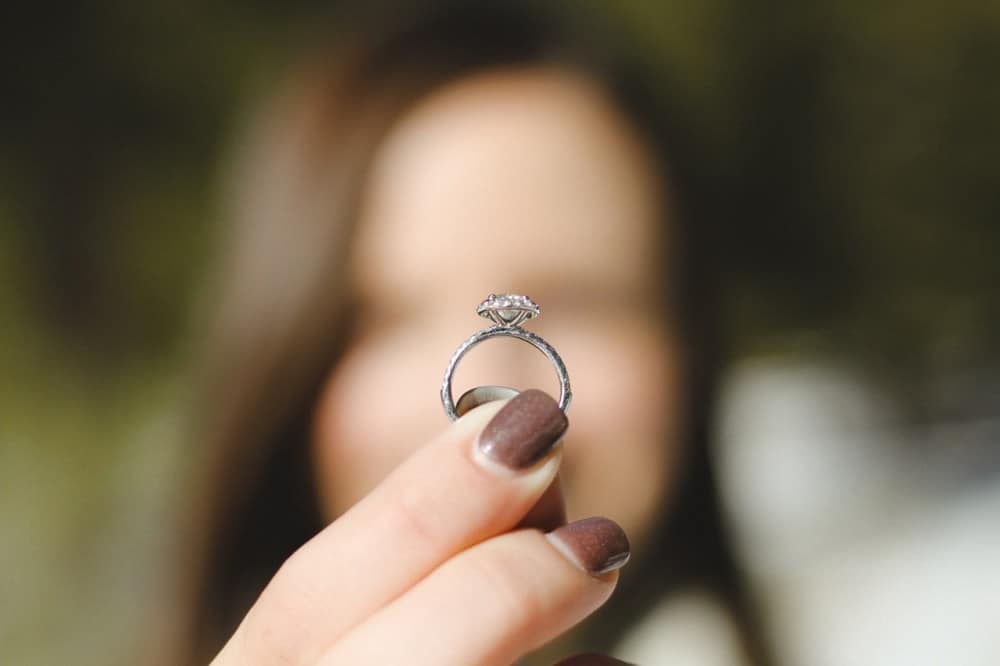
Do you legally have to give back an engagement ring? UK Law

Michelle has built an excellent reputation acting for people from all walks of life – from homemakers, to farmers, politicians, business owners and CEOs.

Under UK law, an engagement ring is usually treated as an absolute gift and does not have to be returned if an engagement ends, unless it was given on the condition that it would be returned. This includes situations where the ring is a family heirloom or where there was an express or implied agreement that it should be returned if the marriage did not take place.

“The gift of an engagement ring shall be presumed to be an absolute gift; this presumption may be rebutted by proving that the ring was given on the condition, express or implied, that it should be returned if the marriage did not take place for any reason.”

This often leads people to ask, “Is an engagement ring a conditional gift?”, and the answer will depend entirely on whether there was a clear condition attached to the gift at the time it was given.

I have to say I cannot see many people proposing with a beautiful engagement ring and putting in the proviso that “if this engagement does not work out and we don’t get married, I will need the ring returned to me”. Not exactly the best footing to start a long-term relationship on.

It is extremely rare but an application can be made to the court for the return of the ring if no agreement can be reached. I would hope that this would not be the case given the likely value of the ring and the costs involved in going to court.

If you do go to court, the court would look at all the circumstances and decide whether it was expressly stated as above that the ring be returned or whether it was implied that the ring should be returned if the engagement broke down. Implied would normally cover the fact that the ring was a family heirloom passed down from generation to generation.

As always, it’s best to speak to a family lawyer for advice on the situation and so that you know what your options are. Don’t just assume the ring is yours.

Michelle Brammer
Divorce and family lawyer Derby

Some FAQs

Is the engagement ring considered a “conditional gift” if I have proof of a verbal agreement?

Yes, it can be, but it is difficult to prove. For the ring to be a “conditional gift,” you must show that there was an express agreement at the time of the proposal that the ring would be returned if the marriage did not take place. Without a witness or recording, a verbal agreement often becomes a “he-said, she-said” situation, which rarely satisfies the court.

Yes. Written evidence like texts, emails, or even WhatsApp messages can be used to prove the gift was conditional. If a message says, “I’m happy for you to wear my grandmother’s ring, but obviously if we don’t work out, it needs to stay in my family,” and the recipient agrees, this creates a strong legal argument that the gift was not “absolute.”

A presumption is a starting assumption the court makes. In this case:

The Presumption: The ring is an absolute gift (the recipient keeps it).

The “Rebuttable” part: This assumption can be “overturned” or “rebutted” if you can produce evidence (like the texts mentioned above) showing that the gift was actually conditional on marriage.

No. Under UK law, the reason for the breakup, even if one partner was unfaithful or simply changed their mind, is legally irrelevant to who keeps the ring. The law moved away from “fault-based” decisions to avoid messy courtroom battles over why a relationship failed.

Yes. A cohabitation agreement is a legal contract. If you include a clause stating that the engagement ring remains the property of the purchaser until the wedding day, or must be returned upon a breakup, the court will generally uphold it. This is the most “ironclad” way to protect the asset.

If the person who received the ring dies, it is presumed to be an absolute gift and becomes part of their estate (passing to their heirs). However, if the person who gave the ring dies, the survivor is legally entitled to keep the ring. In both cases, the law assumes the gift was absolute unless there was a clear agreement to the contrary.

While there is no automatic “heirloom law,” courts are much more likely to find that an heirloom was a conditional gift rather than an absolute one. The inherent nature of an heirloom implies it belongs to a specific lineage. If you can show the ring has been in your family for generations, the court is more likely to “rebut the presumption” and order its return.

Trusted and accredited family law firm

Recognised as a Leading Firm for Family Law by Legal 500, and trusted by our clients for the service we provide.